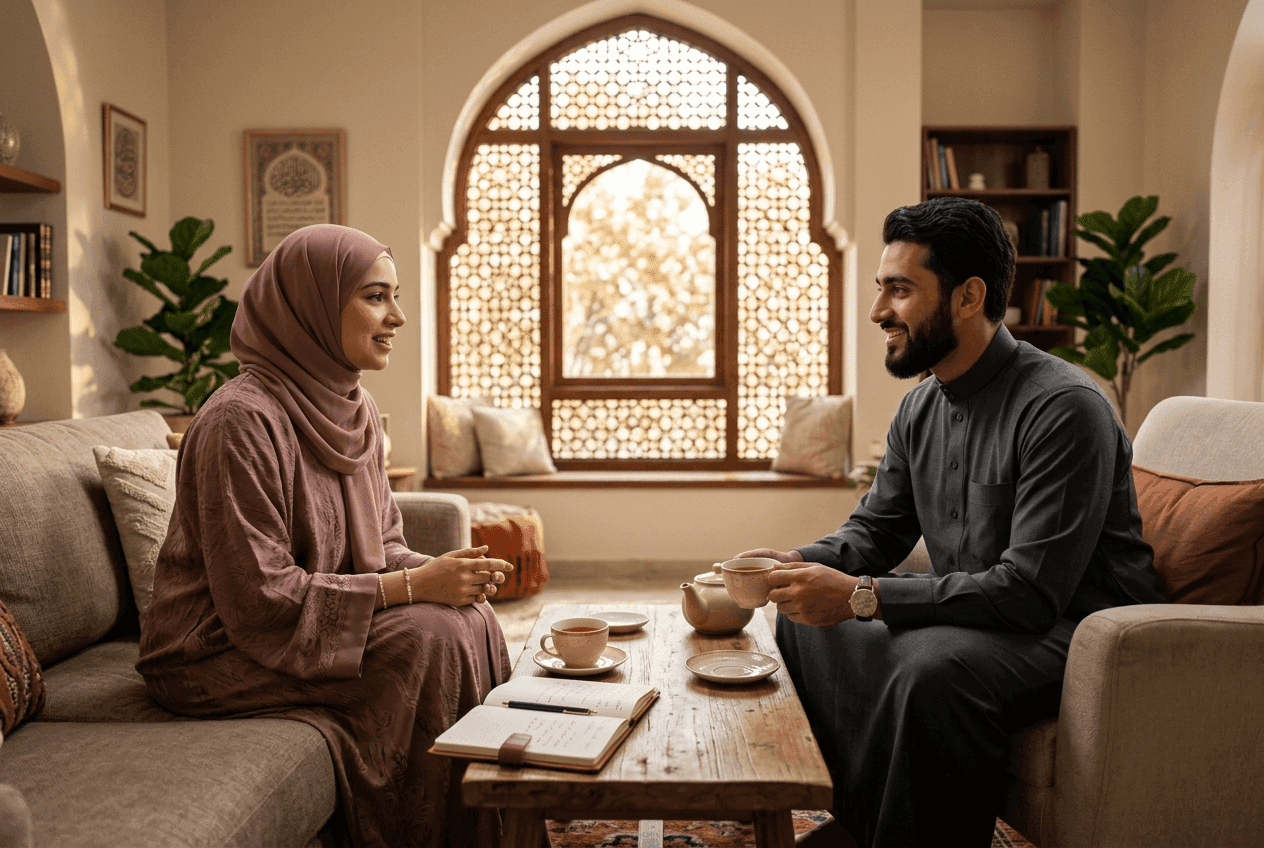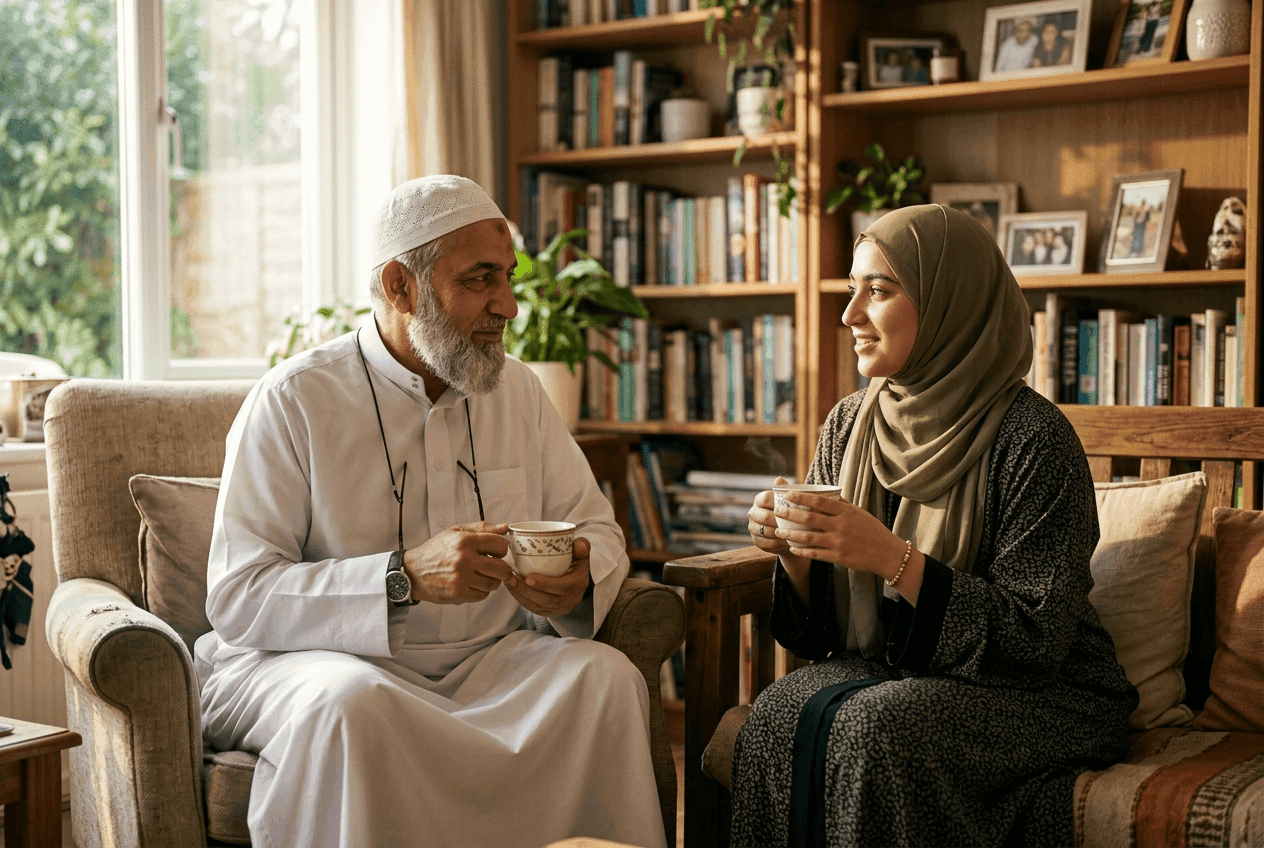
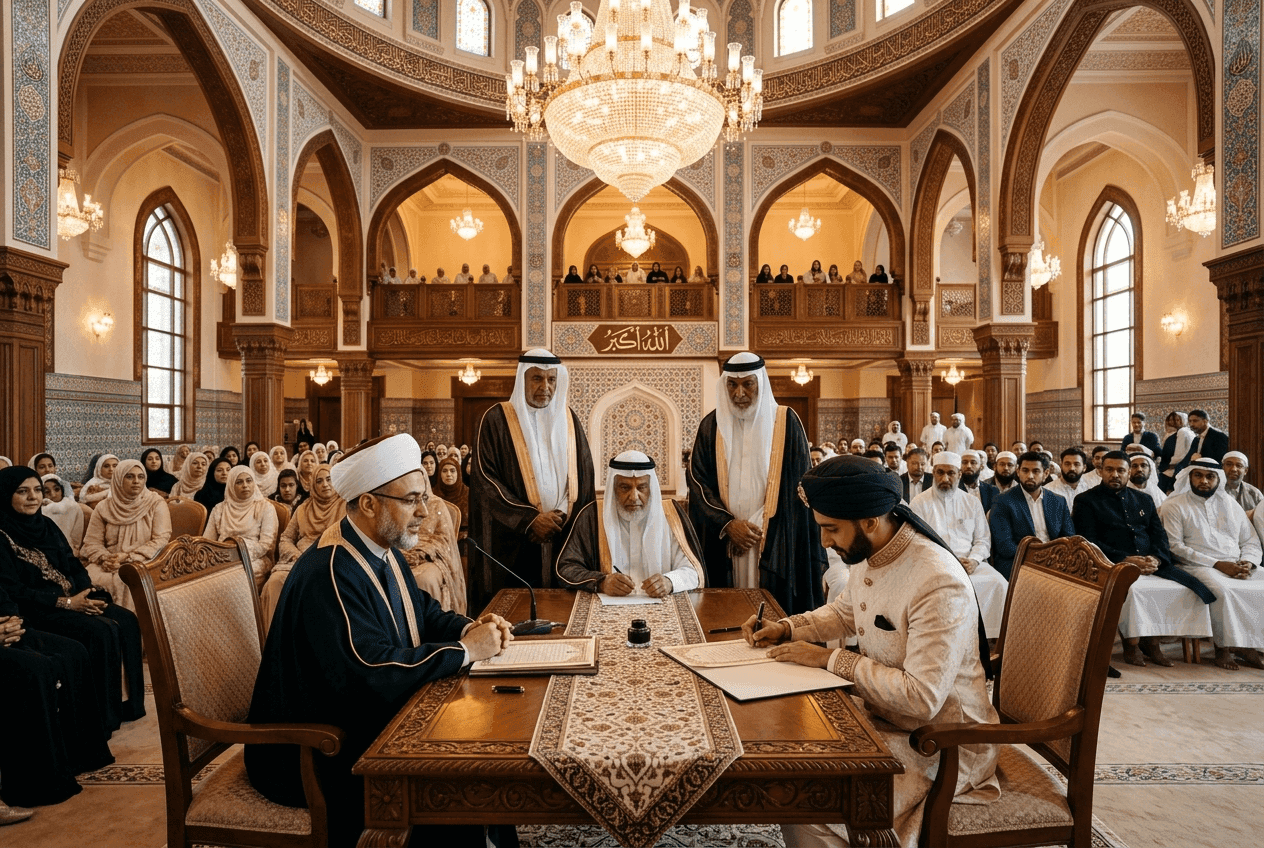
A Nikah (Islamic marriage contract) is a sacred, legally binding covenant between a Muslim man and a Muslim woman. In Islam, marriage is not merely a social custom or emotional commitment; it is an act of worship (ibadah) structured with precise rights, obligations, and legal prerequisites designed to protect both spouses, preserve lineage, and safeguard family dignity.
Understanding the authentic pillars and conditions of a valid Nikah ensures that your union begins on sound Islamic footing, free from legal ambiguity or cultural misconceptions.
The Prophet Muhammad (peace be upon him) described marriage as a heavy covenant (mithaqan ghalidha), requiring honesty, explicit consent, and public accountability.
The 5 essential pillars of a valid Nikah
Islamic jurisprudence (fiqh) across the recognized schools of thought outlines five core requirements that must be fulfilled for a marriage contract to be considered religiously valid:
- Mutual consent and eligibility of both parties: Both bride and groom must be of sound mind, mature, legally eligible to marry each other (free from prohibitive relationships such as close blood ties or foster relations), and entering the union freely without coercion.
- Offer and acceptance (Ijab wa Qubul): The explicit proposal made by one party and the clear, unambiguous acceptance made by the other party in the same assembly (majlis).
- Involvement and consent of the Wali (Guardian): The presence and formal consent of the bride’s lawful guardian, typically her father or paternal relative.
- Two upright witnesses (Shahidayn): The presence of two sane, adult, trustworthy Muslim witnesses who hear and witness the mutual agreement.
- The Mahr (Dowry): An obligatory financial gift or asset given by the groom directly to the bride as a token of respect and commitment.
| Nikah Requirement | Islamic Objective | Key Considerations |
|---|---|---|
| Mutual Consent | Ensures free will & protects against forced union | Both bride and groom must give explicit verbal or written agreement |
| Wali (Guardian) | Safeguards bride's interests & family honor | Acts as advocate; cannot coerce or unreasonably obstruct a suitable match |
| Two Witnesses | Eliminates secrecy & establishes public legitimacy | Must be upright Muslim adults present in the contracting assembly |
| Mahr (Dowry) | Exclusive legal right belonging to the bride | Must have real value; should be realistic, clear, and agreed upon upfront |
| Public Proclamation | Distinguishes lawful marriage from illicit relationships | Recommended to host a Walima (banquet) and notify the community |
1. Free mutual consent: The foundation of marriage
No marriage in Islam is valid without the voluntary, free-will consent of both the man and the woman. Forced marriages (nikah al-ijbar) are strictly forbidden in Islamic law.
When a potential match is being considered, both parties must have the opportunity to evaluate compatibility. The Prophet (peace be upon him) explicitly stated that a previously married woman has more right to her person than her guardian, and a virgin’s permission must be sought and granted.
If either person feels forced, manipulated, or emotionally blackmailed into agreeing, the moral and legal integrity of the contract is compromised. This is why working through the 30 questions to ask before marriage in Islam during the courtship stage is vital to confirming that consent is truly informed.
2. The role of the Wali: Guardian, advocate, and protector
The involvement of the Wali is an established requirement across the major schools of Sunni jurisprudence. The Wali's primary responsibility is not to dictate whom the woman must marry, but rather to advocate on her behalf, conduct background checks, confirm character, and protect her against deception.
Key responsibilities of the Wali include:
- Verifying the groom's character, religious commitment, and financial stability.
- Ensuring the marriage contract does not contain unfair or predatory stipulations.
- Defending the bride's personal rights and honoring her preferences.
If a father or guardian persistently rejects suitable, pious suitors without valid Islamic justification ('adhl), Islamic law provides legal remedies where guardianship may transfer to another relative or a local Islamic judge (Qadi). For a deeper breakdown of guardianship boundaries, consult our complete guide on the role of a Wali in Muslim marriage.
3. Mahr: The bride's independent financial right
The Mahr is an unconditional gift mandated in the Quran (Surah An-Nisa, 4:4). It belongs entirely and exclusively to the bride; neither her parents, guardian, nor husband have any legal right to claim or withhold it.
While Islam emphasizes that the most blessed marriage is often one with reasonable expenses, the Mahr should still reflect dignified mutual respect. Spouses can agree on immediate payment (mu'ajjal) or deferred payment (mu'ajjal). To understand how to calculate fair dowry guidelines and avoid unnecessary financial stress, review our detailed Mahr in Islam practical guide.
4. Two upright witnesses and the prohibition of secret marriage
Islam places absolute emphasis on openness. Secret marriages (nikah sirr)—where two individuals perform a private agreement without witnesses, family knowledge, or community announcement—are considered invalid or deeply blameworthy according to classical scholars.
The requirement of two trustworthy Muslim witnesses serves several purposes:
- It establishes legal proof of the union for civil and religious purposes.
- It protects children born from the marriage by verifying lineage.
- It prevents false accusations of illicit conduct against either party.
Following the contract ceremony, hosting a Walima (wedding meal) is strongly recommended as an expression of gratitude and community celebration.
5. Adding permissible conditions to the marriage contract
One of the most empowering yet underutilized aspects of an Islamic marriage contract is the ability to attach custom conditions (shurut). Both the bride and groom can stipulate conditions as long as they do not contradict Islamic principles or the core objectives of marriage.
Examples of permissible contract conditions:
- Stipulating that the wife may continue her higher education or professional career.
- Defining where the couple will reside (e.g., maintaining an independent home rather than living with in-laws).
- Specifying terms regarding relocation or international travel.
If a condition is agreed upon and recorded in the Nikah document, the husband is Islamically obligated to honor it.
Before reaching the contract stage, couples should complete our step-by-step Nikah checklist and preparation guide to ensure all civil, religious, and logistical details are in order.
Find a Righteous Partner for Halal Nikah
Preparing for a blessed Nikah begins with finding a compatible, practicing spouse who shares your dedication to Islamic principles.
- The Muslim Nikah Matrimony — Explore our halal matchmaking platform built for sincere Muslim singles, supported by photo privacy controls and family guardian options.
- Register Your Free Matrimony Profile — Create a private profile on The Muslim Nikah to connect with compatible singles seeking marriage.
- Explore Muslim Matrimony Pricing — Discover our 100% free matching tools, open browsing, and direct communication features.
- Assess Marriage Compatibility — Download our practical compatibility framework covering deen, lifestyle, finances, and family expectations.
Frequently asked questions
The five core pillars are mutual free consent (Ijab & Qubul), approval of the lawful guardian (Wali), presence of two upright Muslim witnesses, and the mandatory dowry (Mahr).
No. A secret marriage concealed from family and performed without upright witnesses is invalid or severely deficient in Islamic law, as marriage requires open declaration.
While the contract ceremony is legally recognized if Mahr is not specified upfront, an equitable dowry (Mahr al-Mithl) remains an obligatory debt owed to the bride until paid.
Yes. Spouses can agree upon legally binding conditions (Shurut) that do not violate Islamic law, such as completing education, employment terms, or independent housing.