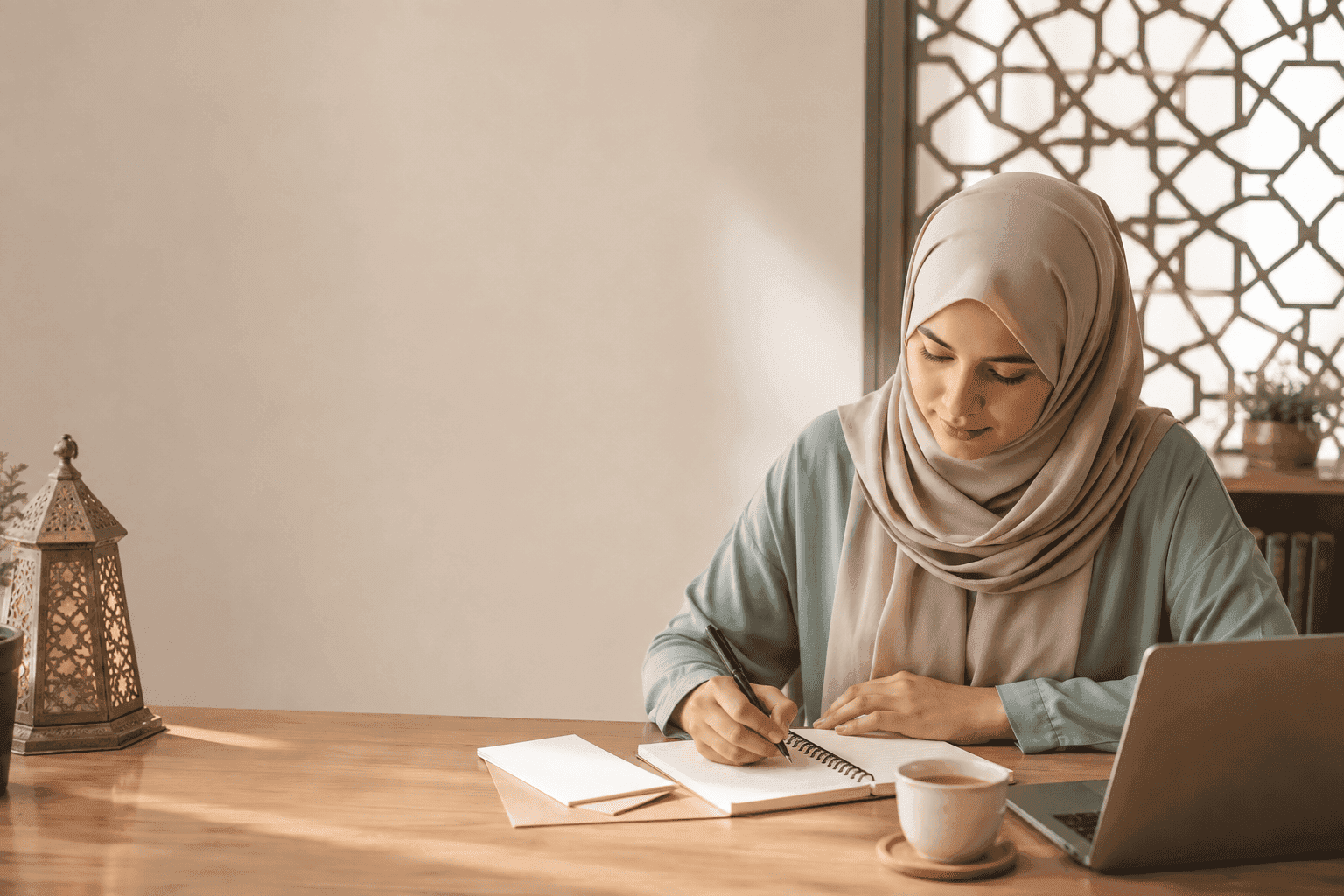
A strong Muslim matrimony profile does not try to impress everyone. It helps the right people understand your real life, values, and marriage direction quickly enough to decide whether a respectful conversation makes sense.
The best profiles are specific without oversharing, confident without self-praise, and honest without becoming a private autobiography.
Use a five-part profile structure
Write one short paragraph for each part:
- Your current life: location, work or study, family context, and ordinary routine.
- Faith in practice: how Islam shapes your week and the home you hope to build.
- Character and interests: use examples instead of a list of adjectives.
- Marriage direction: family involvement, location, children, work, and major plans.
- Who may be compatible: describe values and habits rather than an impossible ideal.
Aim for roughly 150–300 useful words. A shorter specific profile usually performs better than a longer profile filled with phrases such as “simple, caring, honest, and down to earth.”
Replace claims with evidence
| Generic line | More trustworthy version |
|---|---|
| “I am family-oriented.” | “I speak with my parents most days and expect both families to remain part of married life with healthy boundaries.” |
| “I love Islam.” | “I protect the daily prayers, attend a weekly class, and want a home where we keep learning without judging each other’s growth.” |
| “I enjoy travelling.” | “I enjoy one or two planned trips a year, but most weekends are quiet: family visits, walks, and cooking.” |
| “Looking for someone ambitious.” | “I value someone who takes responsibility for their work and family while protecting time for worship, health, and marriage.” |
| “No time-wasters.” | “I am here for marriage and prefer family involvement once basic compatibility is established.” |
Specific writing gives a potential match something meaningful to respond to. It also makes incompatibilities visible before either person invests heavily.
Describe religious practice with humility
Religious labels can mean different things across cultures and communities. Explain your practice in ordinary terms while avoiding self-certification.
For example:
“I try to organise my day around the five prayers and am working on consistent Qur’an study. I value a spouse who encourages growth with kindness rather than comparison.”
This communicates practice, aspiration, and emotional style. While faith remains a central consideration in spouse selection, a profile should still leave room for questions about character and behaviour.
Write what is true now—not the person you hope to become after marriage.
State important expectations early
Include expectations that would materially affect compatibility:
- intended country or city of residence;
- willingness or inability to relocate;
- current children and openness to children;
- family or Wali involvement;
- broad work and education plans;
- living with relatives or providing regular care;
- major language or cultural preferences;
- a previous marriage, where relevant and safe to disclose appropriately.
You do not need to publish every sensitive detail. You do need to avoid creating a false impression. Use the Muslim marriage compatibility checklist to identify which expectations belong in the profile and which belong in a later private conversation.
Protect information that does not belong on a public-facing profile
Do not publish:
- your exact home, workplace, or daily route;
- passport, visa, licence, or government identifier images;
- bank balances, account information, or detailed assets;
- private phone numbers or personal email addresses;
- children’s schools, names, or identifiable photographs;
- information about relatives who have not consented;
- medical documents or other sensitive evidence.
If a profile is private, use controlled photo requests rather than sending unprotected files to a new contact. The platform safety and photo privacy guide explains available controls.
The US Federal Trade Commission notes that scammers may use fake profiles and stolen pictures. Official romance-scam advice recommends reverse-image searching suspicious profile photos and never sending money to an online love interest you have not met.
Write spouse preferences as compatibility signals
Avoid shopping-list language that reduces a person to age, height, income, complexion, passport, or profession. Necessary constraints can be stated neutrally, but the profile should emphasise married life.
Instead of:
“Must be highly educated, attractive, successful, modern but traditional.”
Try:
“I may be compatible with someone who takes faith and responsibility seriously, communicates directly, treats both families with respect, and is open to building our first home in Canada.”
The second version tells a reader what behaviour and future plan matter.
Edit for tone and accuracy
Before publishing, ask:
- Could a compatible person picture an ordinary week with me?
- Have I explained faith through behaviour rather than labels?
- Are my expectations fair and internally consistent?
- Have I disclosed major constraints without exposing private data?
- Does any sentence sound bitter, defensive, superior, or copied?
- Would a trusted family member recognise this as an honest description?
Read the profile aloud. Remove repeated adjectives, jokes that could be misunderstood, and demands you would not accept if written about you.
A complete example
I am a software analyst based in Toronto, raised in a close Indian Muslim family. My weekdays are structured around work and prayer; weekends usually include family, the masjid, cooking, and a long walk. I am fairly quiet at first but communicate directly once comfortable.
I am looking to build a calm, faith-centred marriage where both people keep learning, share household responsibilities, and discuss decisions openly. My parents will be involved once basic compatibility is clear. I plan to remain in Canada and hope for children, insha’Allah.
I may be compatible with someone kind under pressure, consistent in prayer, financially responsible, and able to balance marriage with both families. I value progress over a perfect image.
Use this as a structural example, not a template to copy. Your profile should sound like you.
When the profile is ready, explore The Muslim Nikah platform and register for a private Muslim matrimony profile or browse profiles by compatibility. Then use the 30 questions to ask before marriage when a promising introduction begins.
Frequently asked questions
Cover your current life, religious practice in practical terms, character, family context, marriage goals, location plans, and the qualities you value in a spouse.
Avoid publishing your home or workplace address, government identifiers, financial account details, daily routine, private contact details, or information that could expose relatives.
Long enough to show real compatibility signals but short enough to scan. A useful target is roughly 150 to 300 specific words, divided into short sections.