
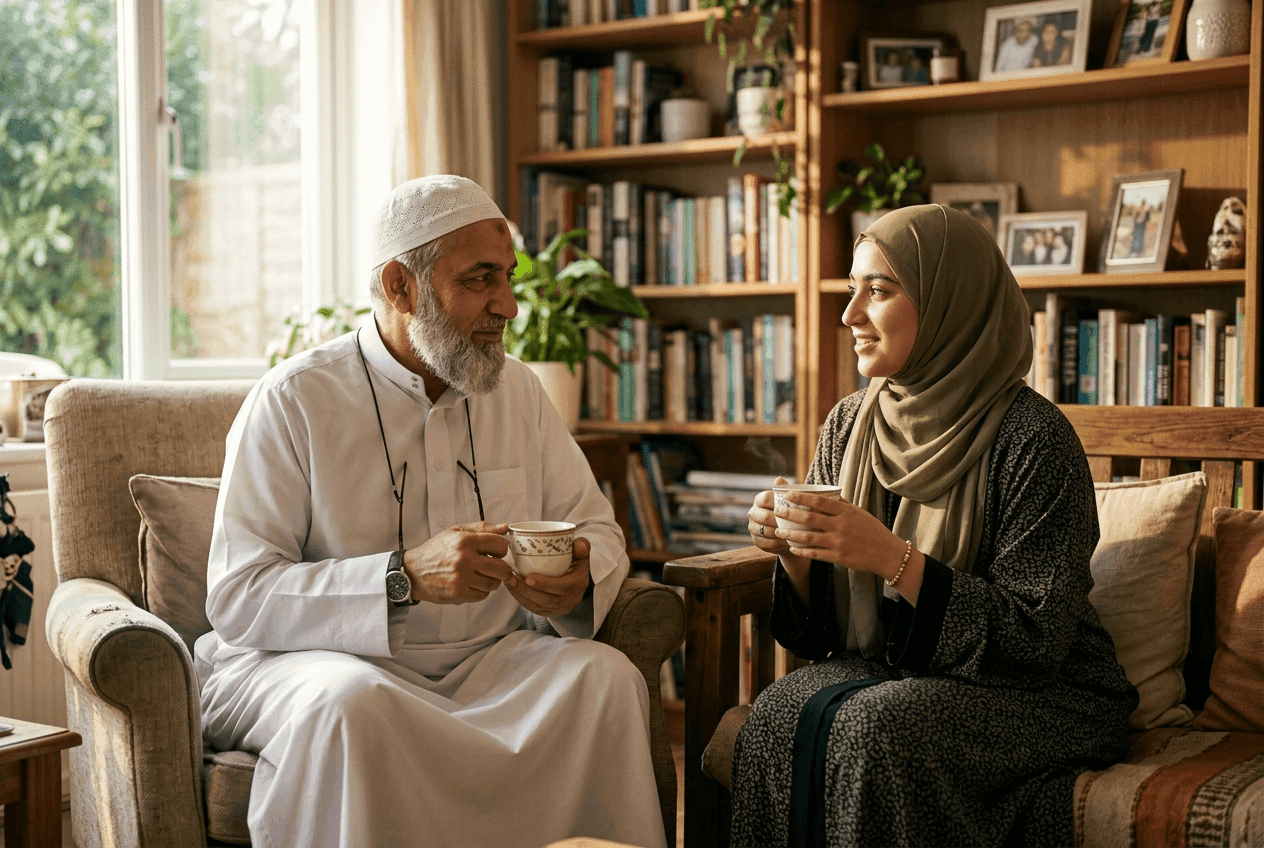
A Wali or trusted guardian can bring wisdom, accountability, and protection to a marriage process. The role works best when it supports the prospective spouse’s informed decision—not when it replaces her voice.
Islamic legal details vary across schools of jurisprudence and jurisdictions. For example, Islamic scholars discuss both the protective purpose of guardianship and the legal position concerning an adult woman’s contract in discussions of Wali approval and legal guardianship. Consult a qualified scholar familiar with your circumstances and comply with civil marriage law where you live.
Support should make consent clearer, due diligence stronger, and coercion harder.
What a helpful Wali contributes
A useful Wali is not merely copied into messages. He understands the person he supports, asks difficult questions calmly, and helps the family distinguish a promising introduction from a persuasive performance.
| Helpful responsibility | What it looks like in practice |
|---|---|
| Protect consent | Checks privately that interest is genuine and pressure-free |
| Clarify intention | Confirms the other person is pursuing marriage, not indefinite conversation |
| Improve due diligence | Helps verify material claims through proportionate, lawful steps |
| Ask practical questions | Covers faith, character, family, finances, location, and responsibilities |
| Maintain boundaries | Keeps communication respectful without unnecessarily blocking dialogue |
| Support an exit | Helps end an unsuitable introduction without shame or harassment |
Consent is not a formality
A woman's consultation and permission are essential requirements in marriage, confirming her fundamental right to choose her husband.
A guardian should therefore create space for an honest “yes,” “no,” or “I need more time.” Warning signs of unhealthy involvement include:
- threatening withdrawal of family love or financial support;
- hiding relevant information from the prospective bride;
- treating ethnicity, status, or personal pride as unquestionable religious rules;
- forcing continued contact after she declines;
- accepting on her behalf without meaningful consultation;
- rejecting every reasonable prospect without transparent grounds.
If consent is disputed or family conflict is severe, seek qualified religious and legal help rather than trying to settle the issue through platform messages.
When to involve a Wali online
Involvement should normally begin before emotional dependence develops. A practical sequence is:
- The profile owner defines the Wali’s role and permissions.
- Initial profile screening confirms basic intent and compatibility.
- The Wali joins once both sides want a serious conversation.
- Families exchange appropriate information and arrange safe meetings.
- Material claims are verified before engagement or contractual decisions.
- Religious and civil requirements are confirmed locally.
The Muslim Nikah supports explicit Wali permissions so a candidate can authorise profile viewing, interest review, or profile assistance without sharing a password. Access can be revoked by the profile owner. Learn how these controls fit the platform’s broader privacy and safety approach.
Questions a Wali can ask
The strongest questions request examples rather than polished labels:
- Marriage intent: Why are you seeking marriage now, and what preparation have you done?
- Faith in practice: How does Islam shape your work, money, relationships, and ordinary routine?
- Character: Tell us about a mistake you repaired or criticism you accepted.
- Family expectations: What responsibilities and boundaries do you expect with both families?
- Finances: What debts, dependants, or obligations materially affect married life?
- Location: Where will the couple live, and is relocation realistically possible?
- Conflict: What do you do when angry, and what behaviour is never acceptable?
- History: Is there any marital, parental, legal, health, or financial fact that must be disclosed before consent?
Use the 30 premarital questions for Muslims to build a shared agenda. The Wali need not dominate every conversation; some subjects may be discussed with a counsellor, scholar, doctor, or lawyer while preserving appropriate privacy.
Due diligence without intrusion
Verification should be relevant, lawful, and proportionate. Confirm identity and material claims through consent-based methods. Do not demand passwords, secretly access devices, publish accusations, or collect unrelated personal data.
Reasonable checks may include family introductions, references willingly provided, confirmation of public professional information, and formal background processes where lawful and consented to. A background check is not a character certificate, and the absence of a record does not replace observation.
For online risks—including money requests, stolen photos, secrecy, and rushed commitment—review the Muslim matrimony red-flags checklist.
Boundaries for profile co-management
If a Wali helps with a profile, agree in writing on:
- which information the Wali may view or edit;
- whether messages are visible;
- who responds to interests;
- what must be discussed before declining or accepting;
- how the profile owner can revoke access;
- which private facts cannot be shared without fresh permission.
Good co-management is transparent to the profile owner. Secret monitoring and uncontrolled password sharing are not substitutes for trust.
The standard to aim for
A Wali should help the prospective spouses make a better decision in a cleaner process. The result may be a confident next step or a respectful no. Both can be successful outcomes when they protect faith, consent, dignity, and long-term wellbeing.
Families beginning online can start with the halal Muslim matrimony guide, explore The Muslim Nikah platform for dignified spouse matching, or browse privacy-conscious marriage profiles when everyone understands the boundaries.
Frequently asked questions
A Wali supports, advises, and protects interests; the prospective bride’s consent is essential. Legal and jurisprudential details differ, so families should consult qualified local scholars and follow applicable civil law.
Yes, when the profile owner explicitly grants access and can revoke it. Permissions should be limited and transparent rather than sharing passwords informally.
Ask about marriage intent, religious practice, character, family expectations, finances, living arrangements, conflict habits, and any material issue that affects informed consent.