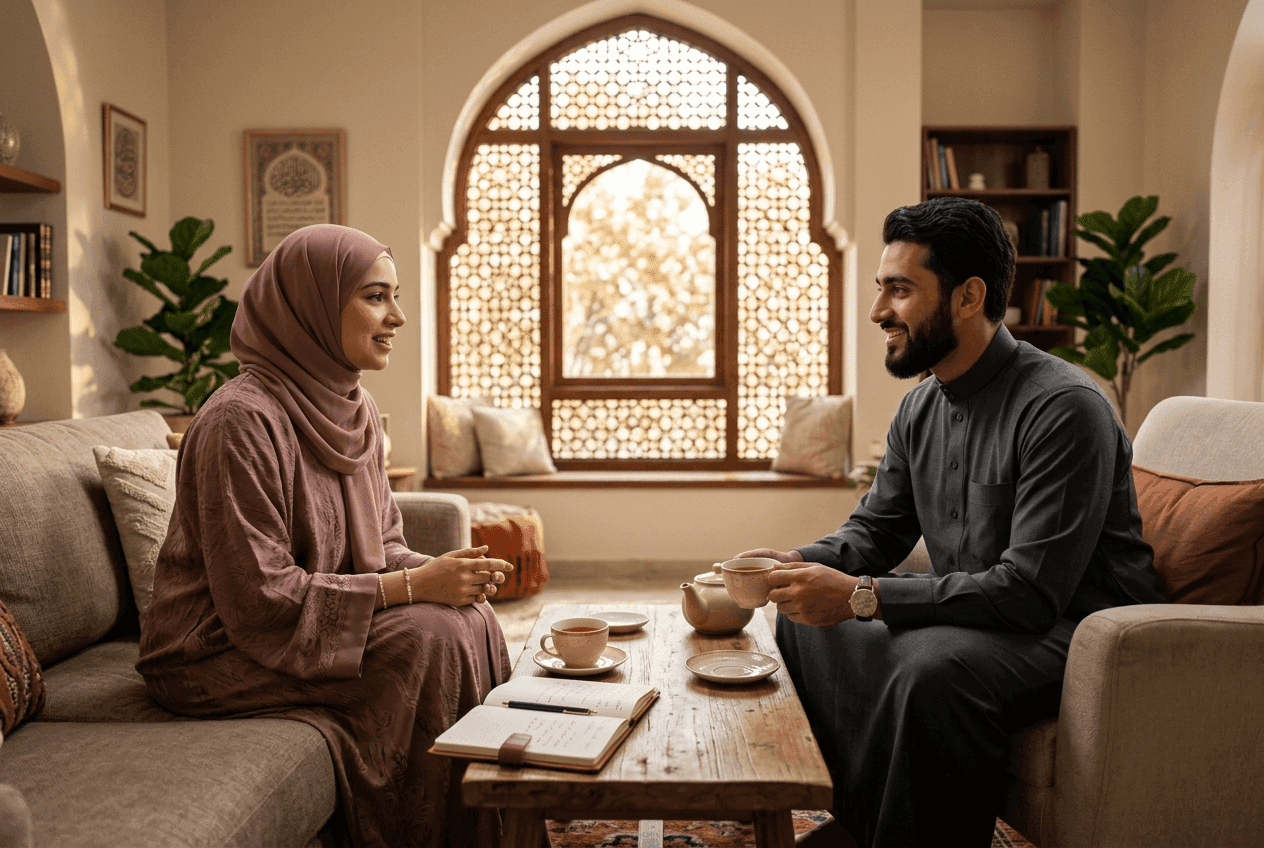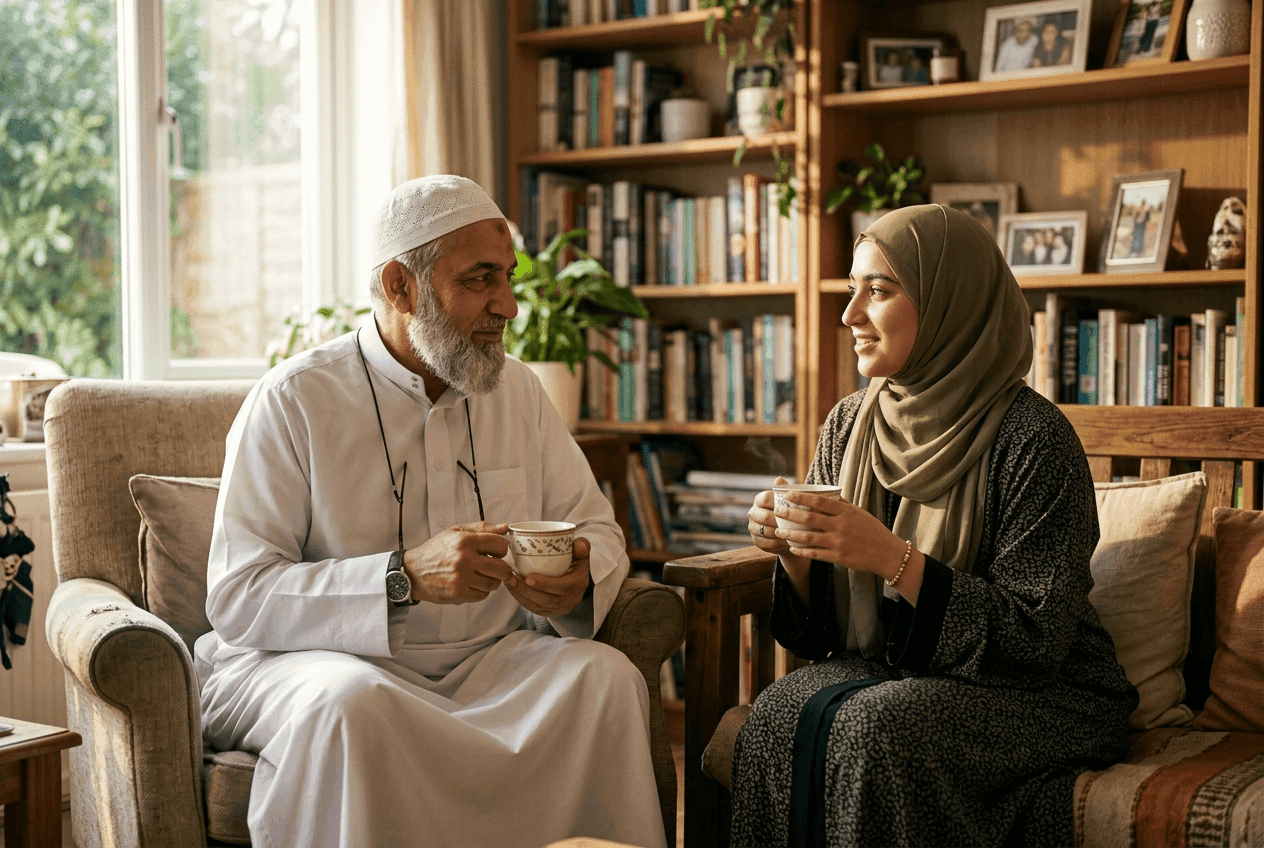
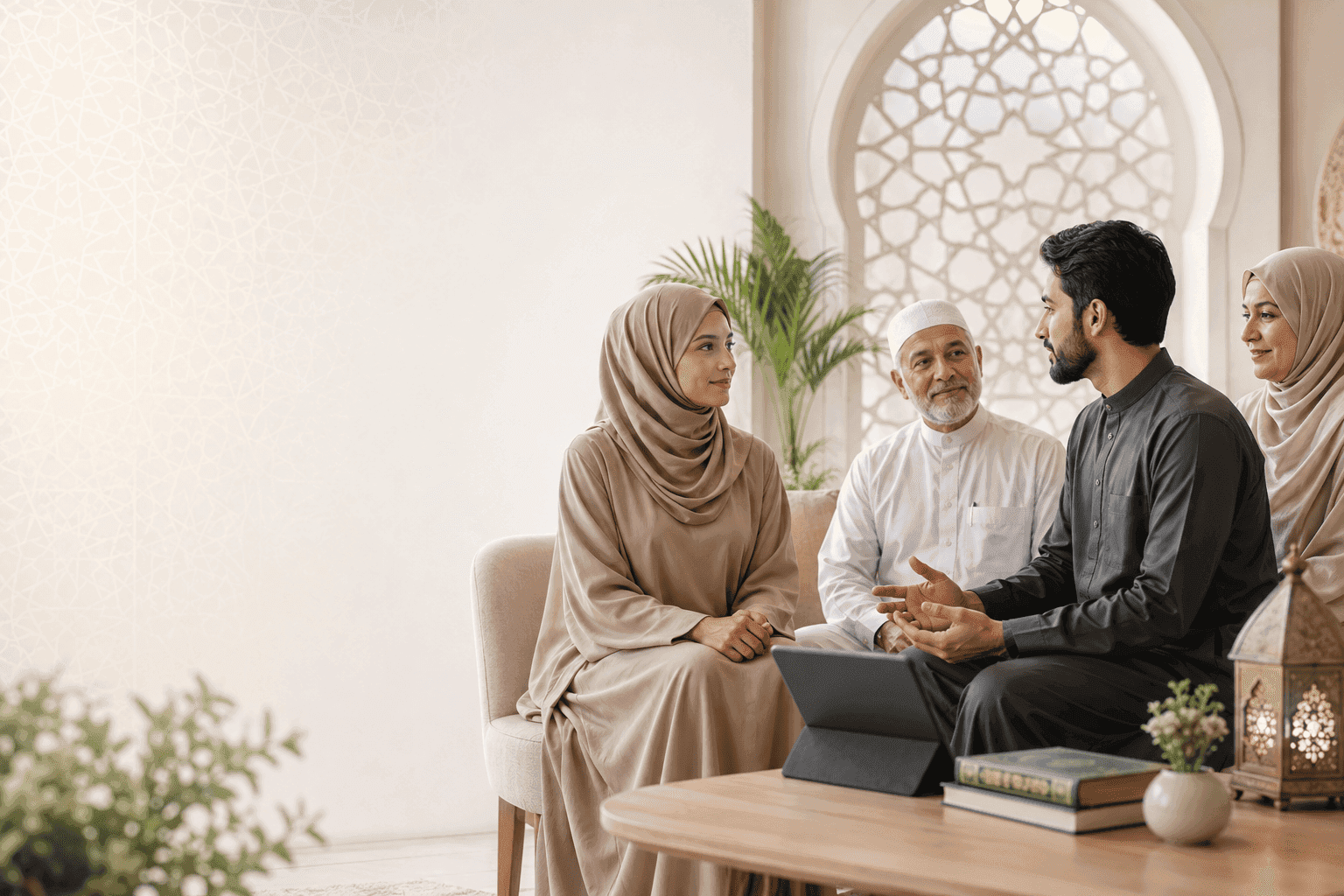
A halal spouse search is not defined by an app, a slogan, or a single feature. It is defined by clear marriage intent, dignified conduct, informed consent, sensible privacy, and accountable decision-making.
Marriage in Islam is grounded in tranquillity, affection, and mercy—not endless uncertainty or performative attention.
A halal spouse search prioritises dignity, clear intentions, privacy protection, and genuine compatibility over superficial speed.
This guide turns those values into a practical online process. It is educational, not a fatwa; personal circumstances and schools of Islamic jurisprudence differ, so consult a qualified local scholar for religious rulings and follow the marriage laws where you live.
1. Begin with a written marriage intention
Before browsing profiles, write down what you are actually seeking. “Someone good” is too vague. A useful intention identifies:
- why you feel ready for marriage now;
- the responsibilities you understand marriage will involve;
- your non-negotiable religious and ethical boundaries;
- the questions you must answer before an engagement;
- how and when family or a trusted Wali will participate.
This is not a shopping list for a flawless person. It is a way to stop loneliness, family pressure, appearance, or a persuasive conversation from quietly rewriting your standards.
If you are ready to search, use the private Muslim profile search filters as a starting point—not as a substitute for real conversation.
2. Separate preferences from compatibility
A preference may shape attraction; compatibility shapes daily life. Height, hobbies, profession, and cultural familiarity can matter, but they do not answer how two people will handle prayer, money, parents, children, illness, relocation, or disagreement.
| Area | Preference question | Compatibility question |
|---|---|---|
| Faith | Do we use the same labels? | How does faith affect our ordinary decisions? |
| Family | Do I like their family culture? | What access, care, and boundaries will relatives have? |
| Work | Is their profession impressive? | How will work hours, relocation, and household labour be managed? |
| Money | What do they earn? | How do they budget, give, borrow, save, and disclose debt? |
| Communication | Are conversations exciting? | Can we disagree without contempt, pressure, or withdrawal? |
Use the full Muslim marriage compatibility checklist when a conversation becomes serious.
3. Protect privacy without hiding material facts
Privacy and honesty are not opposites. Privacy means controlling when, why, and with whom personal information is shared. Honesty means not concealing facts that could materially affect another person’s marriage decision.
Early-stage profiles should avoid home addresses, workplace locations, identification documents, private phone numbers, financial account details, and relatives’ personal information. Photos should be shared deliberately rather than surrendered under pressure.
On The Muslim Nikah, private profiles can use blurred images and controlled photo requests. Read the photo privacy and member safety guide before sharing anything sensitive.
At the same time, do not misrepresent age, marital history, children, location plans, religious practice, health issues that materially affect married life, or financial obligations. The correct timing for sensitive disclosure varies, but deception is not privacy.
4. Bring accountability in before attachment
Family involvement works best when it is early enough to protect judgement but respectful enough to preserve the prospective spouses’ voices. A Wali or trusted relative can:
- confirm that the interaction remains marriage-focused;
- ask questions that feel difficult in an emotionally charged conversation;
- notice inconsistencies or pressure;
- help verify family, work, and identity information appropriately;
- support a calm exit when compatibility is not present.
Consent remains essential. A woman must be consulted and her permission obtained. Family support must never become coercion.
Our practical guide to the Wali’s role explains supportive involvement in more detail, and registered members can use explicit Wali permissions instead of informally sharing account passwords.
5. Ask layered questions, not interview questions
Good questions move from principle to example. “Are you patient?” invites a polished answer. “Tell me about a recent disagreement and how you handled it” asks for evidence.
Use three layers:
- Belief: What do you think a fair marriage requires?
- Behaviour: How do you currently practise that value?
- Scenario: What would you do if work, family, or health disrupted the plan?
The 30 questions to ask before marriage in Islam cover worship, family, finances, children, health, communication, and future plans. Do not ask all 30 in one sitting. Revisit important subjects at different times and notice whether the answers remain consistent.
6. Treat safety checks as normal, not insulting
Due diligence is not cynicism. It is especially important when distance, immigration, money, or private images are involved.
Pause if someone demands secrecy, rushes emotional commitment, refuses reasonable family contact, provides inconsistent personal details, pressures you for photos, or asks for money. The US Federal Trade Commission warns that romance scammers commonly move conversations off-platform, claim urgent problems, and request difficult-to-recover payments. Official romance-scam guidance recommends never sending money or gifts to an online love interest you have not met in person.
Use the detailed Muslim matrimony red-flags and privacy checklist, and report concerning behaviour through the platform rather than investigating a risky person alone.
7. Move forward with evidence and calm
A healthy introduction does not require artificial urgency. Before an engagement or Nikah discussion, both sides should understand the major facts, families should have appropriate contact, and unresolved questions should be named clearly.
Consider premarital counselling with a qualified professional who respects your religious context. Counselling is not only for relationships in crisis; it can surface assumptions about conflict, intimacy, money, family roles, and expectations before those assumptions become commitments.
A practical next-step sequence
- Write your intention and non-negotiables.
- Create a specific, privacy-conscious Muslim matrimony profile.
- Search and exchange a small number of purposeful messages.
- Involve family or a Wali before deep emotional attachment.
- Discuss major compatibility areas and verify material facts.
- Meet safely and appropriately when feasible.
- Seek religious, legal, and counselling guidance relevant to your circumstances.
- Proceed only with free consent and a realistic plan.
A careful process cannot guarantee a particular outcome. It can, however, protect dignity, improve the quality of the decision, and make it easier to recognise when an introduction should move forward—or end respectfully.
Start Your Halal Matrimony Journey
Ready to search for a spouse with dignity, clear intentions, and family involvement?
- The Muslim Nikah Matrimony — Explore our halal matchmaking platform built for practicing Muslim singles and families.
- Register Your Free Profile — Create a private profile with photo security and Wali collaboration.
- Premarital Questions Checklist — 30 essential questions covering faith, finances, character, and future goals.
Frequently asked questions
A purposeful search begins with marriage intent, respectful communication, sensible boundaries, honest disclosure, and timely involvement of family or a trusted Wali. Personal circumstances and scholarly guidance may differ, so seek qualified local advice when needed.
There is no single timeline for every family, but involvement should happen early enough to create accountability and before emotional commitment overtakes practical due diligence.
No. Share photos only when there is a genuine reason, use controlled access where possible, and never allow pressure to override your privacy or comfort.