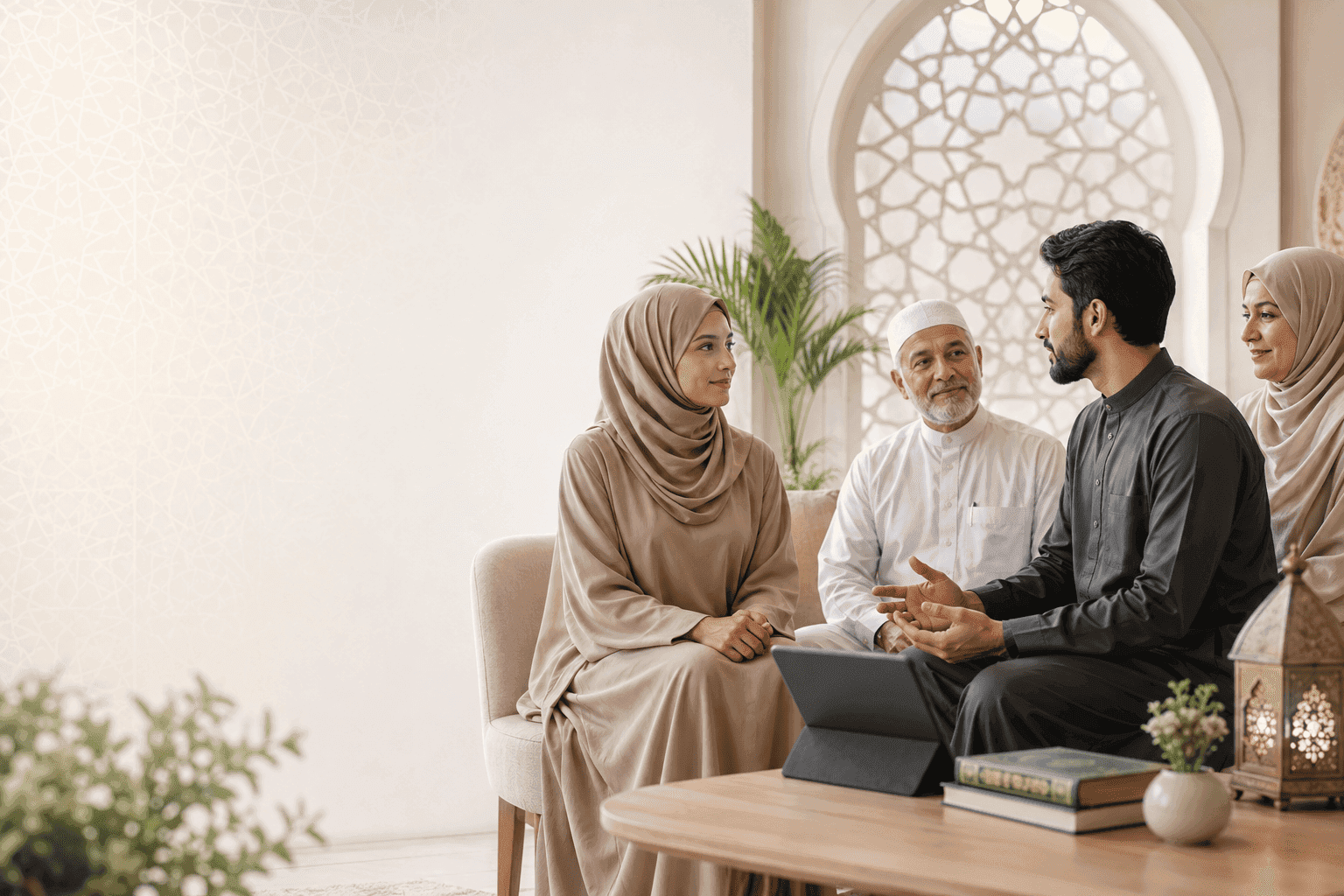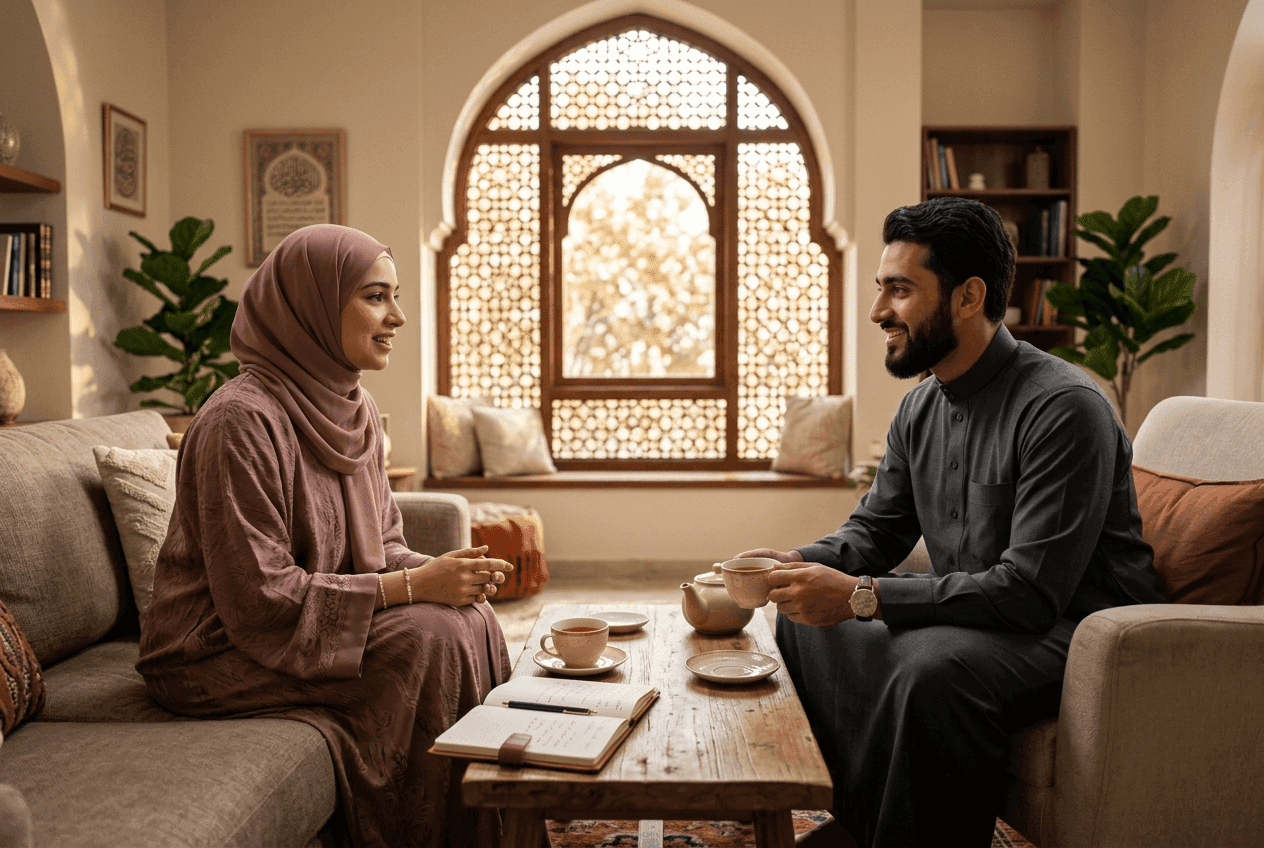

Marriage in Islam begins with intention. A marital relationship is built on tranquillity, affection, and mercy — not transaction, appearance, or social pressure.
A purposeful spouse search focuses on observed character, clear expectations, and mutual respect rather than speed or superficial appeal.
This guide explains how to find a spouse in Islam in a way that honours that intention — covering preparation, the search process, introductions, family involvement, and the qualities that matter in a life partner. It is educational guidance, not a fatwa. Scholars and jurisprudential schools differ on specific rulings, so consult a qualified local scholar for religious guidance in your situation.
1. Begin with sincere intention (niyyah)
Before beginning any spouse search, clarify your intention. Ask yourself:
- Am I ready to fulfil the responsibilities of marriage — financially, emotionally, and practically?
- Am I searching for a spouse, or searching to escape loneliness, pressure, or boredom?
- What kind of partner and marriage am I genuinely prepared to build?
A sincere intention shapes the whole process. It keeps the search purposeful and protects you from drifting into connection for its own sake.
2. Understand the Islamic guidance on spouse selection
Religion and character are the primary foundation for selecting a spouse. Physical compatibility, cultural fit, and practical circumstances matter, but they should not outweigh deen and akhlaq (character).
When choosing a spouse, give careful weight to:
- Faith and practice — not just labels, but how Islam actually shapes their daily decisions
- Character — honesty, patience, humility, and how they treat family and strangers
- Compatibility — shared goals for children, finances, living arrangements, and family roles
- Consent — both parties must give free and informed agreement
3. Tell your family or a Wali early
Most scholars agree that the involvement of a Wali — a guardian, typically a father or male relative — is part of the Islamic marriage process, particularly for women. Even where jurisprudential opinions differ on the exact ruling, the practical wisdom of involving family is widely recognised.
Early family involvement:
- Creates accountability and prevents the search from drifting into inappropriate territory
- Gives you an external perspective when you are emotionally invested
- Makes the formal introduction process smoother when you find a compatible candidate
- Protects you from pressure or manipulation by a third party
The Wali's role is to support and protect, not to override consent. The prospective spouse's free agreement remains essential.
If a Wali is unavailable — due to distance, estrangement, or loss — a trusted community figure, imam, or elder can serve a similar support role.
4. Where to find a Muslim spouse
The most common legitimate paths include:
Community networks Word-of-mouth through trusted family members, friends, and community members remains a primary path in many Muslim communities. It has built-in vetting but limited reach.
Mosque and community organisations Some mosques facilitate introductions, halaqas, and matrimony programmes in structured, family-involved settings. Quality and availability vary significantly.
Muslim matrimony platforms Private Muslim matrimony websites and apps allow broader searches while maintaining filtering by sect, location, and education. Photo privacy controls and Wali co-management features — like those on The Muslim Nikah — support dignified, family-involved processes online.
Professional matchmakers and matrimony bureaus Traditional matchmakers can offer more curated introductions with more family involvement. The quality depends entirely on the matchmaker and can involve significant fees.
The best approach is often a combination: use an online platform for broader initial searching, while keeping family informed and involving a Wali or trusted advisor throughout.
5. What to look for when meeting a potential spouse
Islam permits men and women to see each other and speak before marriage to assess compatibility in a respectful setting.
When meeting or communicating with a potential spouse, assess:
| Area | Questions to explore |
|---|---|
| Faith and practice | How does Islam shape their daily life, not just their identity? |
| Character | How do they handle disagreement, disappointment, and pressure? |
| Family expectations | What role will each family play after marriage? |
| Life goals | Where do they plan to live? Do they want children, and how many? |
| Finances | What are their expectations around income, savings, and provision? |
| Communication | Can they discuss difficult subjects with honesty and respect? |
Avoid premature emotional investment before these foundations are explored. Read a full list of 30 premarital questions to structure early conversations.
6. Protect your privacy during the process
Online spouse searches involve sharing personal information, which requires care:
- Share photos only with people you have reason to trust and, where possible, through controlled-access features rather than freely shared images
- Do not share your home address, workplace, or financial details early in the process
- Be cautious of pressure to move conversations off-platform quickly
- Involve a trusted person who can review the situation from outside your emotional perspective
If you notice red flags or unsafe behaviour, stop the process and seek support.
7. Move at a pace that allows due diligence
One of the most common risks in any spouse search is allowing hope and attraction to accelerate the process beyond what due diligence permits.
A helpful pace:
- Initial browsing and shortlisting on a private platform
- Introduction — a meeting or call with family or Wali present or informed
- Structured conversation using meaningful questions
- Family-level discussion and investigation of character (istikhara is appropriate throughout)
- Decision on engagement with full family involvement
The exact timeline varies, but the principle is: sufficient information to make an informed decision, not sufficient time to become emotionally committed before the decision has been made rationally.
8. Make istikharah a practice, not an afterthought
Istikharah — the prayer of seeking Allah's guidance — is recommended for important decisions.
Istikharah is not a one-time action that produces a dream or a sign. It is a sustained orientation: seeking Allah's guidance, acting with due diligence, and accepting whatever unfolds as part of His plan.
Pray istikharah at every stage, not only at the final decision.
Summary
Finding a spouse in Islam is a purposeful, dignified process when grounded in:
- Sincere intention to build a marriage pleasing to Allah
- Clear priorities — faith and character first
- Family and Wali involvement from early in the search
- Honest, structured conversation before emotional commitment deepens
- Privacy and safety throughout any online search
- Trust in Allah through sustained istikharah
If you are ready to begin, create a private Muslim matrimony profile on The Muslim Nikah and start your search in a dignified, marriage-focused environment.
Frequently asked questions
The Islamic approach to finding a spouse combines sincere marriage intention, prioritising deen and character, involvement of a Wali or family member, dignified and purposeful communication, and timely decision-making. The exact process varies by scholarly opinion and family practice.
Many scholars permit online matrimony platforms when used with clear marriage intent, proper family involvement, controlled communication, photo privacy, and dignified conduct. The platform's purpose and your conduct within it both matter. Consult a qualified local scholar for guidance specific to your situation.
Ideally from the beginning of the search — not only at the formal meeting stage. Early Wali involvement creates accountability, provides an external perspective, and makes the formal introduction smoother.