Finding a Muslim spouse online is now common. But "halal" in the context of online searching is not just about the app's name or a list of features — it is about how you conduct the process.
This guide explains how to use online Muslim matrimony platforms in a way that aligns with Islamic values: purposeful intent, dignified communication, privacy protection, family involvement, and clear decision-making. It is educational guidance, not a fatwa; practices and rulings differ between scholarly opinions and families, so consult a qualified scholar for religious guidance on your specific situation.
Conducting an online search with Islamic etiquette ensures that technology serves as a tool for marriage rather than an end in itself.
What makes an online spouse search halal?
There is no single ruling that covers all possible formats of online spouse searching. But Islamic scholars broadly agree on the principles that make the process legitimate:
- Clear marriage intent — you are searching for a spouse, not companionship, entertainment, or validation
- Respectful conduct — communication is dignified and does not involve content or interaction that would not be appropriate in a family setting
- Sensible boundaries — conversations do not involve khalwa (a man and woman being alone without a chaperone in a way that could lead to harm)
- Privacy protection — personal information is not shared recklessly
- Family involvement — parents or a Wali are informed and involved, not bypassed
- Timely decision-making — the search leads to a decision rather than indefinite correspondence
An online platform does not automatically make a process halal or haram. Your conduct within the platform determines the Islamic character of your search.
1. Choose a purpose-built matrimony platform
Not all platforms serve the same purpose. The distinction matters:
| Platform Type | Primary Purpose | Key Features & Privacy |
|---|---|---|
| Casual Dating Apps | Short-term connection & entertainment | Open photo access, public profiling, minimal family involvement |
| Muslim Matrimony Platforms | Serious Nikah & marriage | Private photo controls, Wali co-management, localized filters |
Using a matrimony-specific platform signals your intent clearly, attracts similarly serious candidates, and provides safety controls — including blocking, reporting, and controlled contact sharing — that generic apps do not prioritise.
Look for a platform that offers:
- Photo privacy (photos private by default, not publicly visible)
- Wali or family co-management features
- Filtering by sect, location, and religious practice
- Clear reporting and safety tools
The Muslim Nikah offers these features as core capabilities, not premium add-ons. Browse active Muslim candidates here.
2. Build an honest, specific profile
A halal search starts with an honest profile. Misrepresentation — about age, appearance, employment, or religious practice — is a form of deception that violates the trust the process requires.
Your profile should accurately represent:
- Your religious practice in practical terms (not just "practising")
- Your family background and expectations
- Your genuine deal-breakers and priorities
- Where you live and whether you are open to relocation
- Your actual timeline for marriage
Avoid: vague statements like "easy-going and fun," exaggerated piety, or presenting an idealised version of yourself that the other person will eventually have to discover is inaccurate.
Read the full guide: How to write a Muslim matrimony profile that builds trust.
3. Protect your photos from public access
Photo privacy is both a practical safety measure and a modesty consideration.
On many mainstream platforms, photos are publicly visible to all users. On a halal online search, photos should ideally be shared only with:
- Candidates you have made initial contact with and have reason to trust
- People who have expressed serious matrimony interest, not just casual curiosity
- Through controlled-access features (where you can revoke access) rather than shared downloads
The Muslim Nikah's photo protection is on by default — your photos are private until you approve individual members to see them.
Never feel pressured to share photos quickly. A candidate who pressures you to share photos before you are comfortable is demonstrating poor boundaries early.
4. Communicate with clear boundaries
Text-based communication is the primary mode for initial online matrimony contact. A halal approach to this communication means:
Keep it purposeful. Messages should focus on understanding compatibility, character, and marriage goals — not casual conversation designed to sustain connection indefinitely.
Avoid frequent or casual messaging. Long, daily, or emotionally intimate messaging with someone you have not met in person and have not committed to pursuing is the online equivalent of prolonged khalwa.
Do not share private photos. This includes photos that are not appropriate in a family context.
Move toward a formal introduction. If initial written communication is positive, the next step should be an introduction involving family or a Wali — not continued private messaging.
5. Involve your Wali or family early
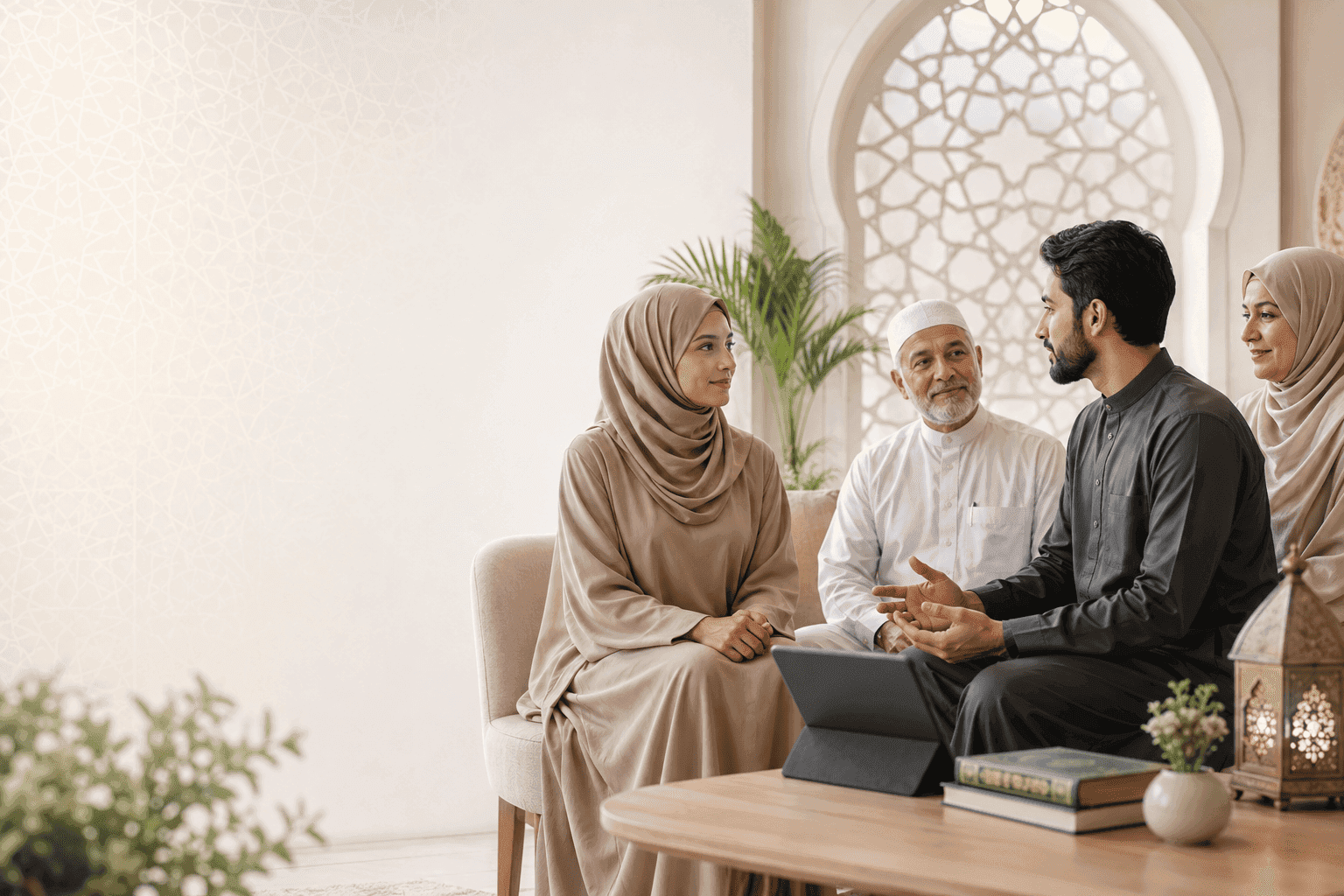
The involvement of a Wali — typically a father, uncle, or trusted male guardian — is part of the Islamic marriage process that online platforms should support, not circumvent.
Practically, this means:
- Tell a parent or trusted family member that you are searching online
- Share the platform and your profile with a Wali before meaningful conversation begins
- Involve a Wali or family member in any formal introduction
- Use co-management features that allow a guardian to assist without requiring your personal login
The Muslim Nikah supports Wali co-management as a core feature. Read the full Wali guide.
If your Wali is unavailable — due to distance, estrangement, or loss — a trusted community figure, imam, or elder can fulfil a similar accountability role.
6. Move from messaging to a formal meeting
Online communication is a preparation phase, not the process itself. The goal is to determine whether to proceed to a formal introduction — not to conduct the entire courtship via message.
A reasonable sequence:
- Profile review and initial interest expressed
- Brief written exchange to confirm basic compatibility and mutual interest
- Inform your Wali or family of the candidate
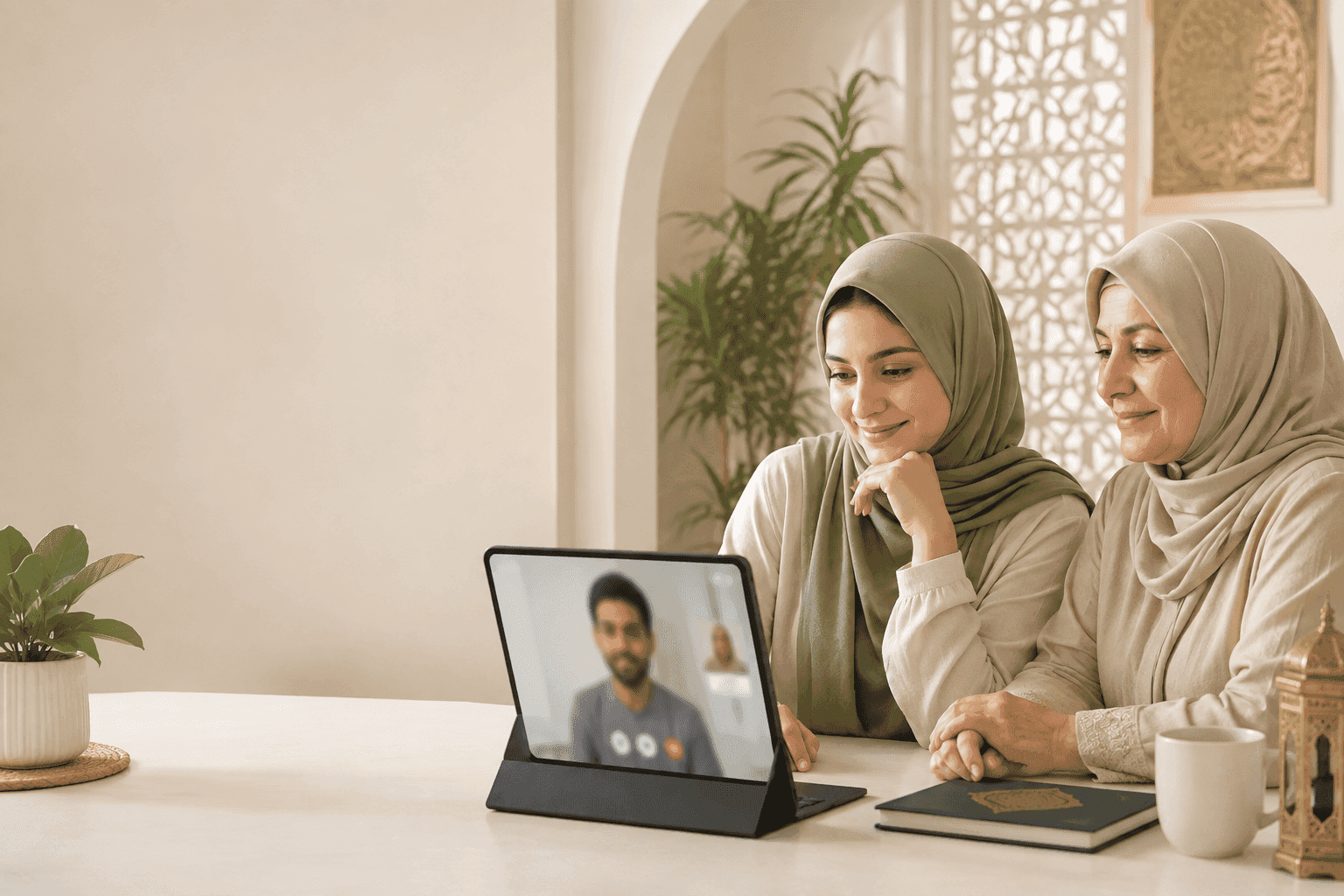
- Formal meeting or call with family present or informed
- Structured conversation using meaningful premarital questions
- Family involvement and investigation of character
- Decision
Avoid skipping steps because online communication feels safer or more comfortable than formal meetings. The formality of the process provides structure, accountability, and the dignity that the process deserves.
7. Recognise when an online interaction is not progressing
A halal online search should move toward a marriage decision or an honest conclusion that the match is not suitable. It should not become:
- A prolonged online friendship that substitutes for family-involved introduction
- A source of emotional intimacy with someone you have never formally met
- An excuse to delay commitment indefinitely
If a candidate consistently delays meeting, avoids involving family, or keeps the relationship in a private messaging space, this is a signal that requires honest reassessment.
8. Use safety controls when needed
A halal online search also protects you from bad actors. Common warnings:
- Requests for money, gift cards, or financial help from someone you have never met in person
- Pressure to move to a private messaging app quickly
- Inconsistent personal details or unwillingness to video-call or meet with family
- Emotional pressure to comply with requests
If you notice these signs, stop contact, block and report the account, and tell a trusted person. Read the full guide on Muslim matrimony safety and red flags.
Summary
A halal online Muslim spouse search rests on five pillars:
- Sincere marriage intent — you are searching for a spouse, not connection for its own sake
- An honest profile — represent yourself accurately so compatibility is genuine
- Privacy protection — manage photo access and personal information carefully
- Family involvement — inform and involve your Wali from early in the process
- Purposeful communication — messages lead toward a formal introduction, not indefinite correspondence
If you are ready to begin in this way, create a private Muslim matrimony profile — it is free, photo protection is on by default, and Wali co-management is available from every account.
Frequently asked questions
Clear marriage intent, honest profiles, photo privacy, family and Wali involvement, purposeful communication that leads toward a formal meeting, and timely decision-making. The platform you use matters less than how you conduct yourself within it.
Yes, and ideally from the start. Informing your Wali or a trusted family member early creates accountability and prevents the search from drifting into inappropriate territory.
Initial written exchange should confirm basic compatibility and mutual interest, then progress to a family-involved formal meeting. Prolonged private messaging without moving toward a formal introduction is not recommended.